Diagnosed With High Blood Sugar? Here's How Everyday Nigerian Food — Rice, Swallow and Soup — Can Help You Bring Your Numbers Down in 30 Days (Without Giving Up the Food You Love)

You remember the day the doctor said it.
"Your blood sugar is high. You're diabetic."
And everything after that became noise.
You nodded. You collected the prescription. Maybe someone told you to "watch what you eat" and "cut down your rice and swallow."
Then you got home, sat down, and the real fear arrived.
What am I even going to eat now?
Because your whole life is rice. Eba. Yam. Bread. Garri. Pounded yam.
If they take all of that away… what is left? Air?
You've been on your phone late at night, scaring yourself with stories of people who lost their sight, their legs, their lives.
You've maybe stopped sugar in your tea and felt proud — then your reading was still high, and you felt cheated.
You're carrying this quietly. Maybe you haven't even told people at work. You make excuses at parties so nobody asks questions.
And underneath it all, one thought keeps circling: Is it too late for me?
If any of this is you — drop everything you are doing now and read every word of this slowly.
The Thing Nobody Explains To You
Here's what the doctor didn't have time to tell you.
When your blood sugar stays high for a long time, it doesn't just sit there quietly. It slowly damages your body from the inside — like sweet, sticky syrup left sitting in a pipe, thickening and blocking it over time.
The World Health Organisation has been clear about where this leads if it isn't controlled. High blood sugar, year after year, can:
- Damage the tiny blood vessels in your eyes — leading to poor sight, and for some people, blindness.
- Damage your kidneys until they begin to fail — and once the kidneys fail, you're facing dialysis: machines, hospitals, and money most families simply don't have.
- Damage the blood vessels feeding your brain and heart — raising your risk of stroke and heart attack. This is how diabetes quietly takes people before their time.
- Damage the nerves and blood flow in your feet — so a small sore refuses to heal, gets worse, and in the worst cases ends in amputation. You may have watched it happen to someone you know.
And here's the part that quietly destroys families: every one of these costs money — heavy money. The longer it's left, the worse it gets, and the more it drains you. Endless drugs to buy every month. Tests. Hospital admissions. Dialysis that can cost more than a salary. Treatment for the eyes, the feet, the heart. People sell land, empty their savings, and beg relatives — all to manage damage that, in many cases, could have been slowed or prevented far earlier.
I'm not telling you this to frighten you for no reason. I'm telling you because almost all of it can be slowed down, prevented, or even improved — and the single biggest thing within your control is what goes on your plate, every single day.
That's the whole truth in one line: fix your food, and you go a long way toward fixing your life — and protecting your pocket.
Make Your Food Your Medicine
There's an old saying: make your food your medicine.
It's not just nice words. The food you eat three times a day is either quietly raising your blood sugar and wearing down your body… or quietly bringing it down and protecting you. Every meal is a step in one direction or the other.
Most people are using their food as a slow poison without even knowing it — not because they're careless, but because nobody ever showed them how their everyday rice, swallow, bread and cold drinks are affecting them. And nobody showed them how to eat those same foods in a way that works for their body instead of against it.
That's exactly what I'm about to show you.
A Safer Way — About Herbs, Mixtures and Supplements
Let me gently say something that could protect your health for years to come.
When people get frightened about their sugar, it's natural to start reaching for anything that promises a quick fix — agbo, herbal mixtures, "diabetes" capsules and powders of all kinds.
I understand the desperation. But here's something worth knowing.
With most of those mixtures and supplements, nobody can really tell you what is inside, in what quantity, or how it behaves once it enters your body. There's often no proper measurement and no medical supervision. And your body — already working hard against high sugar — is the one left to deal with whatever it is.
The hard truth is that some of those things can quietly put more strain on the very organs you're trying to protect, like your kidneys and liver. A person can believe they're helping themselves while, without knowing it, making things harder for their body.
So here's the question that changes everything: What if you didn't need any of that?
What if the things already in your kitchen — your beans, your vegetables, your fish, your local foods, eaten the right way — could do more for your blood sugar than any mystery mixture, with no hidden risk, and your doctor fully in the picture?
And here's the part that really matters for your pocket: those mixtures and supplements often cost far more than what I'm about to show you — bottle after bottle, month after month, with no end in sight. This is a one-time step that teaches you to use food you're already buying.
That's not a dream. That's exactly what I'm about to show you, step by step.
The Truth About Doctor Visits
Let me be honest with you about something else.
Your doctor matters. Your medicine matters. Please keep both.
But here's what nobody tells you: if you keep visiting the doctor, collecting your prescription, and then going home to eat the exact same way that raised your sugar in the first place… you'll spend money, and money, and more money — and still wonder why your numbers won't come down.
Think about it. A single visit to a private doctor or a nutritionist in Nigeria can cost you ₦15,000, ₦20,000, sometimes far more — and that's per visit. And let's be truthful: many people can't even afford that at all. For plenty of families, sitting down with a nutritionist is simply out of reach — so they're left completely on their own, guessing with their food, with no one to guide them.
And even the ones who can afford it often find the nutritionist talks about foreign foods, not their actual plate of eba and egusi.
You could spend hundreds of thousands of naira over the years on consultations and still not have one simple, clear plan for what to put on your plate tomorrow morning.
That's the gap this fills — the everyday food part that the rushed five-minute appointment never covers. For a one-time payment, you get the plan that finally makes everything else — your medicine, your doctor's work, your money — actually pay off.
Working with your doctor while fixing your food is how you stop wasting money and start seeing real results.
Why This Guide Exists
So here's why I put this together.
I kept seeing the same thing, again and again. People handed a diagnosis and a prescription — and absolutely no real help with the one thing they face three times a day: their food.
Told the same vague thing: "watch what you eat." Then left to guess. Guessing wrong. Reading still high. Feeling like a failure.
I watched people give up rice entirely and become miserable — then break down and eat double, and spike worse than before.
I watched money disappear into things that didn't work: strange imported "diabetic" foods abandoned in a week, "sugar-free" products that spiked them anyway, foreign diet plans built around foods you can't even buy in the market, and "just cutting sugar in tea" while still eating mountains of white rice — because nobody explained that the rice and swallow were the real issue.
So I went and did the work. I pulled the real research — what actually moves blood sugar, and what the strongest studies show about food, weight, and even turning diabetes around — and I sat with the one question nobody was answering:
How does a real Nigerian eat their real food and still take control of this?
The answer turned out to be almost embarrassingly simple. It isn't a secret herb. It isn't starving. It's a handful of small, specific changes to food you already eat — the order you eat it in, the portion, the way it's prepared, and what sits beside it on the plate.
The kind of thing where someone tries it and says, "That's it? That can't be enough."
And then they check their reading after a meal — and the number is lower. The same day.
That's the moment people start to believe.
Introducing…
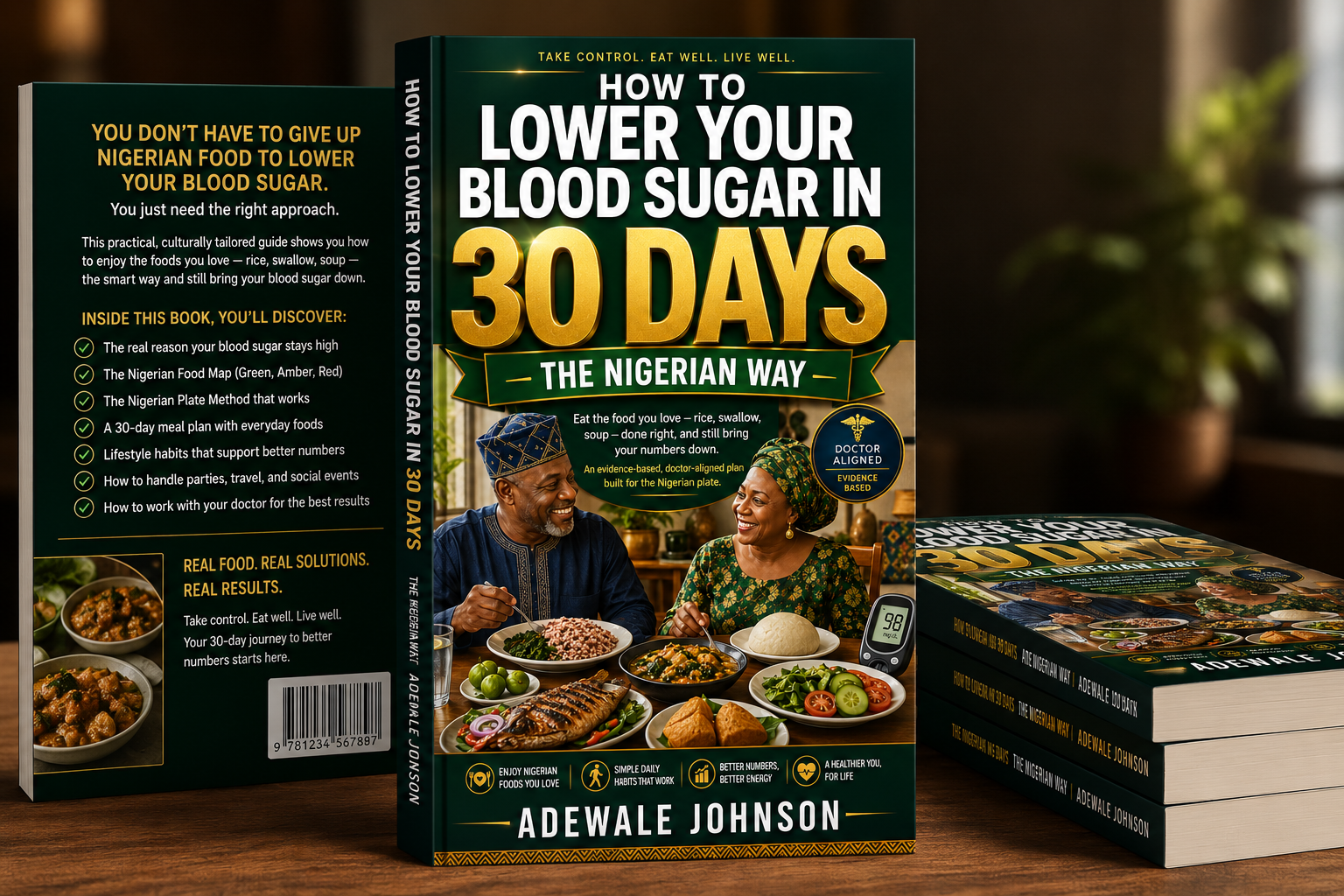
So I put all of it — the full method, the food lists, the exact meals, the portions, the timing, what to avoid, and how to know it's working — into one simple guide built for the Nigerian plate.
What's Inside
Inside, you'll discover:
- What's really raising your blood sugar — the simple truth nobody explained to you, and why "just cutting sugar in your tea" was never going to be enough on its own. Once you see this, everything else finally makes sense.
- The Quick Win you can do at your very next meal — one small change you can make at the next thing you eat, today, that many people find lowers their reading the same day. It's the moment you start to believe this really works.
- The Green, Amber and Red Nigerian Food List — a simple "traffic light" for your everyday foods, so you know in one glance what you can eat freely, what to keep small, and what to be careful with — eba, rice, yam, bread, soft drinks and more.
- The Nigerian Plate Method — how to build a plate that keeps your sugar calm, with no weighing, no counting, and no app. Just your hand and your normal plate. Once you see it, you'll never look at your food the same way again.
- The full 30-Day Meal Plan — every breakfast, lunch, dinner and snack laid out for you, using ordinary Nigerian food from your own market. No more standing in front of the pot wondering, "what am I allowed to eat?"
- How to survive owambe, parties and family pressure — exactly what to do (and the warm words to say) when someone is piling your plate or asking "are you too good for our food?" — so you enjoy yourself without stress, shame, or wrecking your progress.
- The honest truth about turning things around — what's genuinely possible for your blood sugar, how some people improve so much their doctor reviews their medication, and how to do all of this hand-in-hand with your own doctor — safely.
And the best part? You don't need foreign foods. You don't need to starve. You don't need to give up rice, swallow, or soup. It's the same simple, evidence-based method — built for the way you already eat.
Real People. Real Words.
Just So You Know — This Is Not Just A Book Of Advice
It's a complete take-control toolkit. Inside, you're not only getting the full plan. You're getting 7 practical tools, each one designed so you can use it straight away, in your kitchen and at the market:
- The Green / Amber / Red Nigerian Food List
- The Nigerian Plate Method
- The Swallow & Soup Swap Chart
- The full 30-Day Nigerian Meal Calendar
- The Market Shopping List
- The Blood Sugar Log
- The "Questions To Ask Your Doctor" Sheet
And on top of those, you also get 3 free bonuses (more on those in a moment).
Now think about what all this would normally cost you. A few visits to a private doctor or nutritionist — for those who can even afford it — runs into ₦50,000, ₦100,000 and beyond. Bottle after bottle of mixtures and supplements drains money every single month with no end.
So a fair price for everything in here — the complete plan, all 7 tools, and all 3 bonuses — would honestly be much higher.
But I'm not charging ₦25,000. I'd rather it reach the people who truly need it.
WAIT — You Also Get These 3 Free Bonuses Today
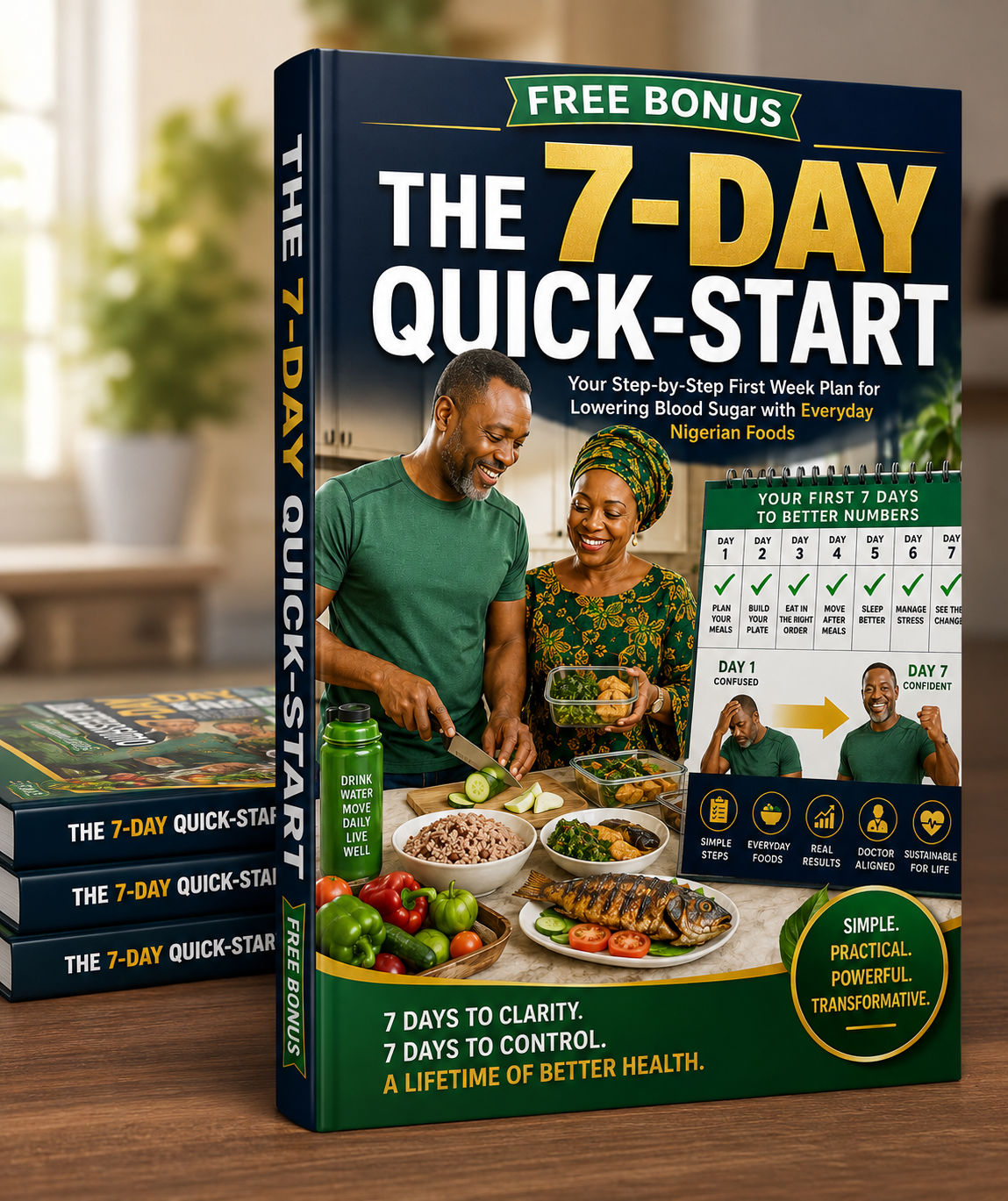
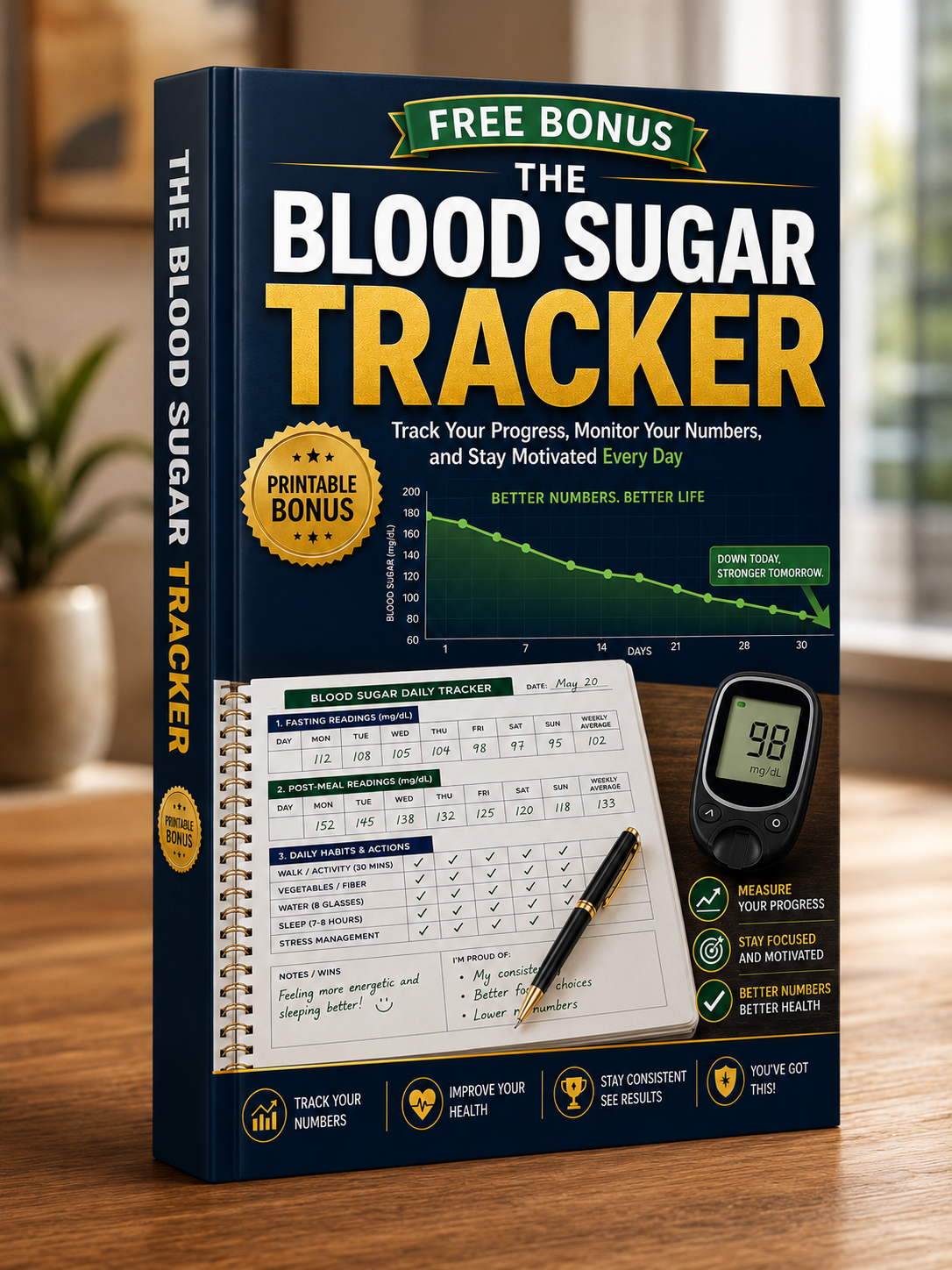
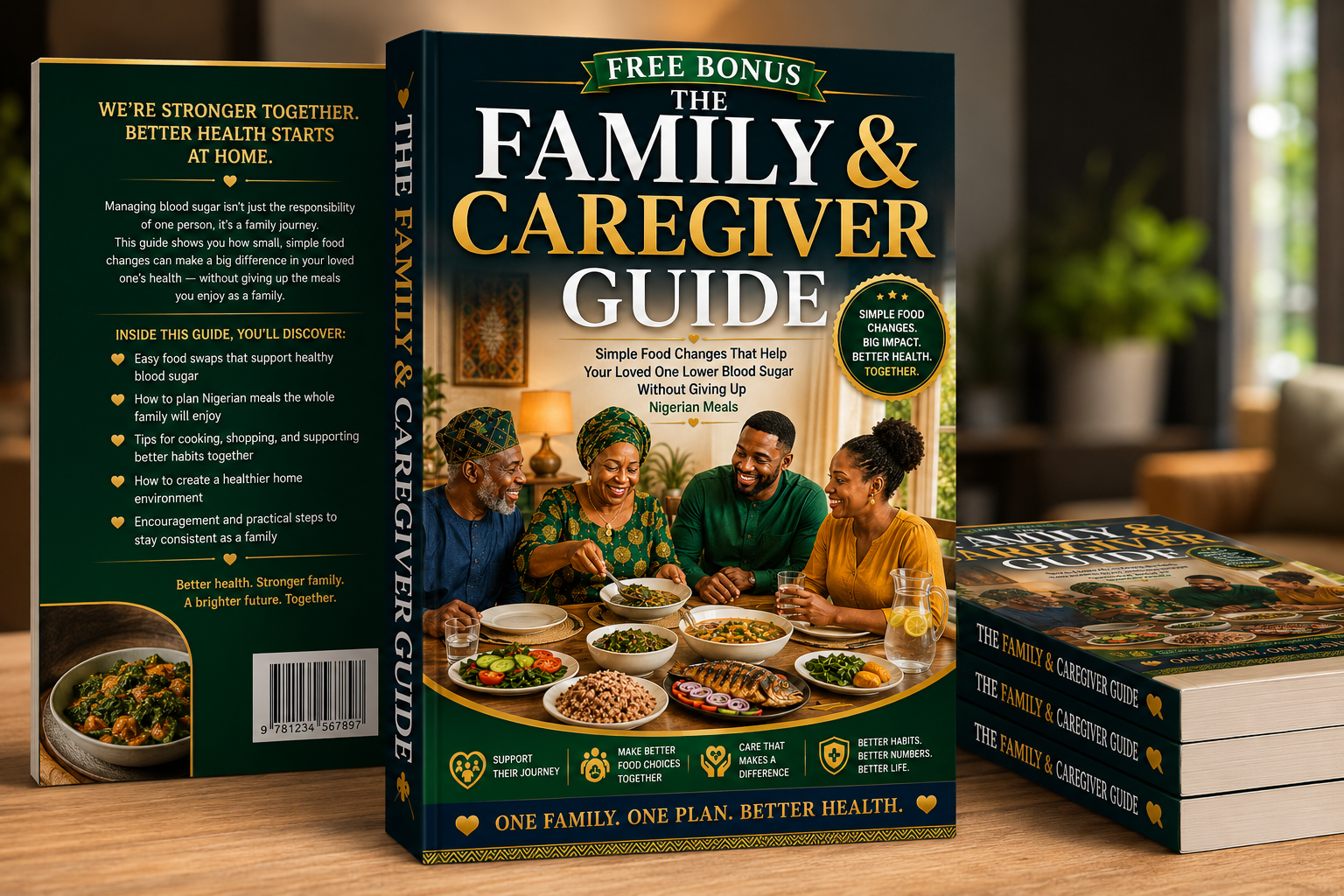
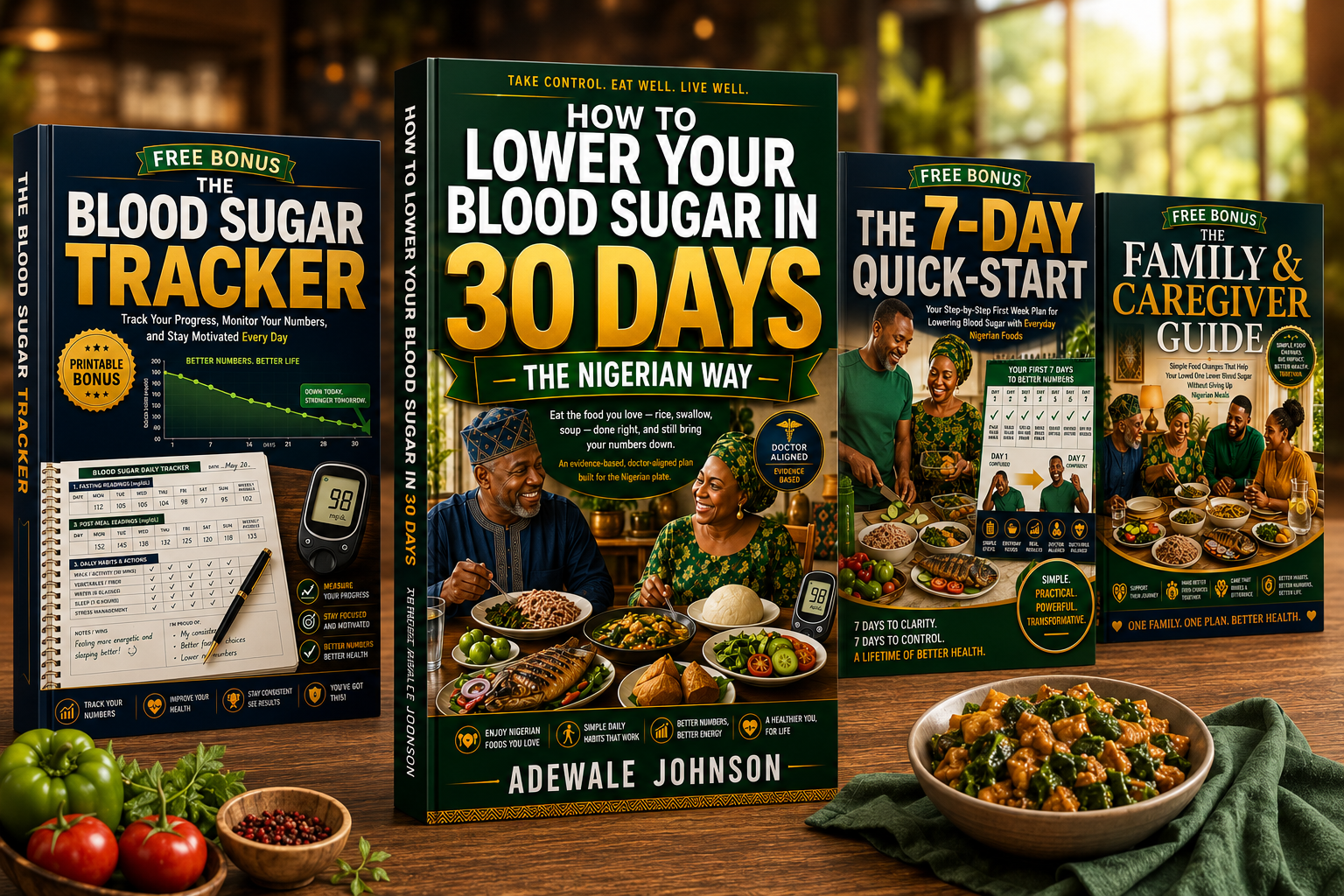 👉 Click Here To Get The Guide + All 3 Bonuses — ₦9,900
Still Feeling Unsure? My 30-Day Promise To You
I understand completely. So here's my promise:
Get it, read it, use it. If within 30 days you honestly feel it hasn't helped you, simply email us and we'll refund your ₦9,900 in full. No stress, no hard feelings.
The risk is entirely on us — because we're confident this will change how you eat and how you feel.
More Real People. More Real Words.
You've Got Two Choices Right Now
Maybe you were meant to see this today. Who knows?
But the choice — and your health — is in your hands.
👉 Yes, I Want To Take Control — Get The Guide + Bonuses for ₦9,900
This guide is educational and supports — but does not replace — the care of your doctor. Always keep taking any prescribed medication and follow your doctor's guidance. Individual results vary from person to person.